Western Weather Group, Inc. blog
NRECA PowerXchange & TechAdvantage
WUI Conference / IAFC
Ohio University Meteorology Symposium
EUCI Wildfire Mitigation for Utilities Conference
AI & Real-Time Situational Awareness
Utilities are leveraging drones, satellite imagery, and AI-powered fire modeling to anticipate ignition risks and make faster, data-informed operational decisions. This session highlights how advanced situational awareness tools are reducing risk exposure, improving coordination, and protecting both assets and communities.
- Moderator: Jeff Gawrych, Utility Solutions Advisor, Western Weather Group
- Michael Haydon, Director, Wildfire Mitigation Situational Awareness, Xcel Energy
- Wade Ward, Manager, Wildfire Mitigation APS
- Ravi Nair, Sr Manager, Asset Health & Performance Center, PG&E Distribution Grid Ops
- Alex Hoon, Principal Meteorologist, NV Energy
A Behind the-Scenes Look at How Western Weather Group Ensures Reliable Data from the Start
Explore how Western Weather Group checks, verifies, and maintains high-quality weather station data every day.
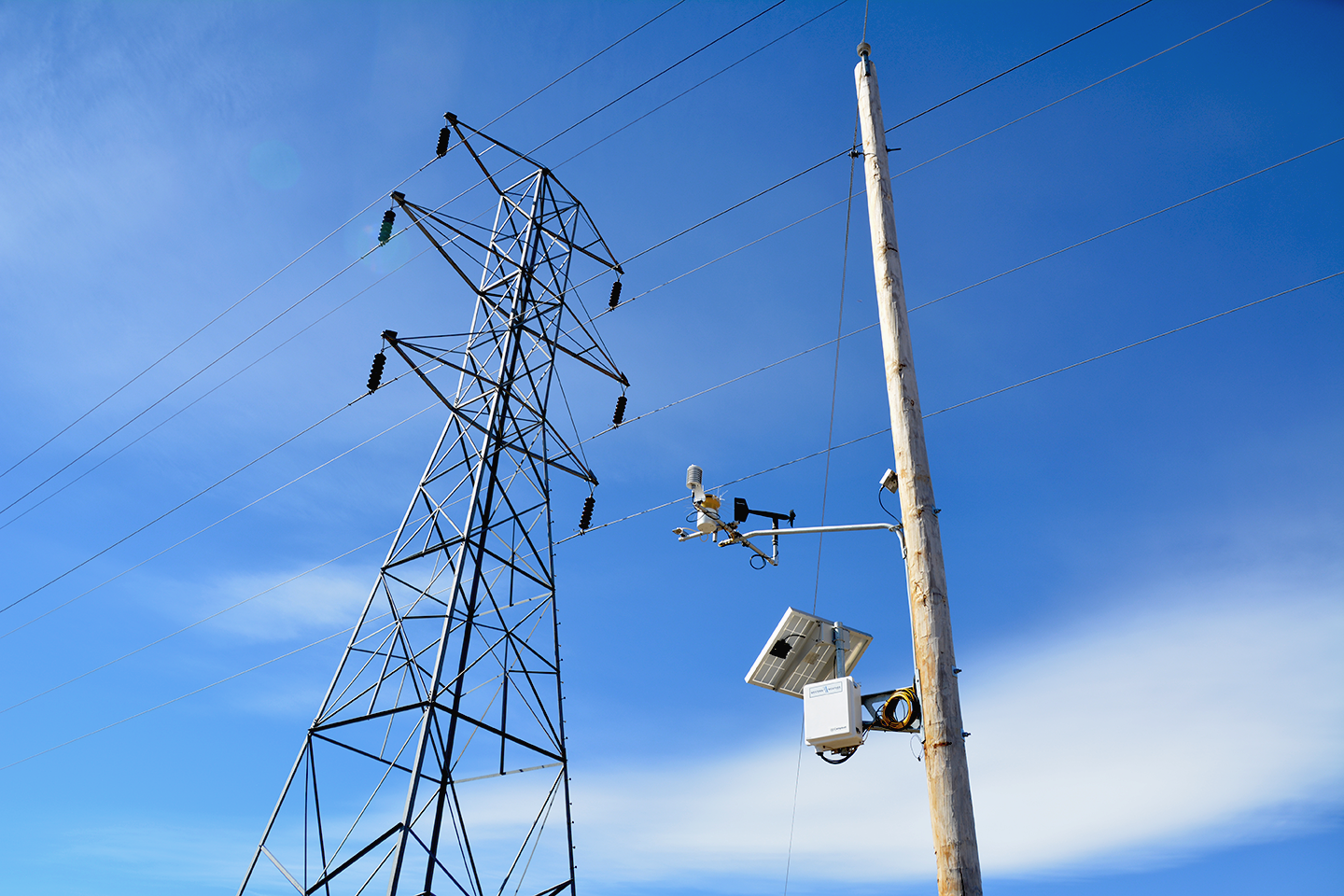
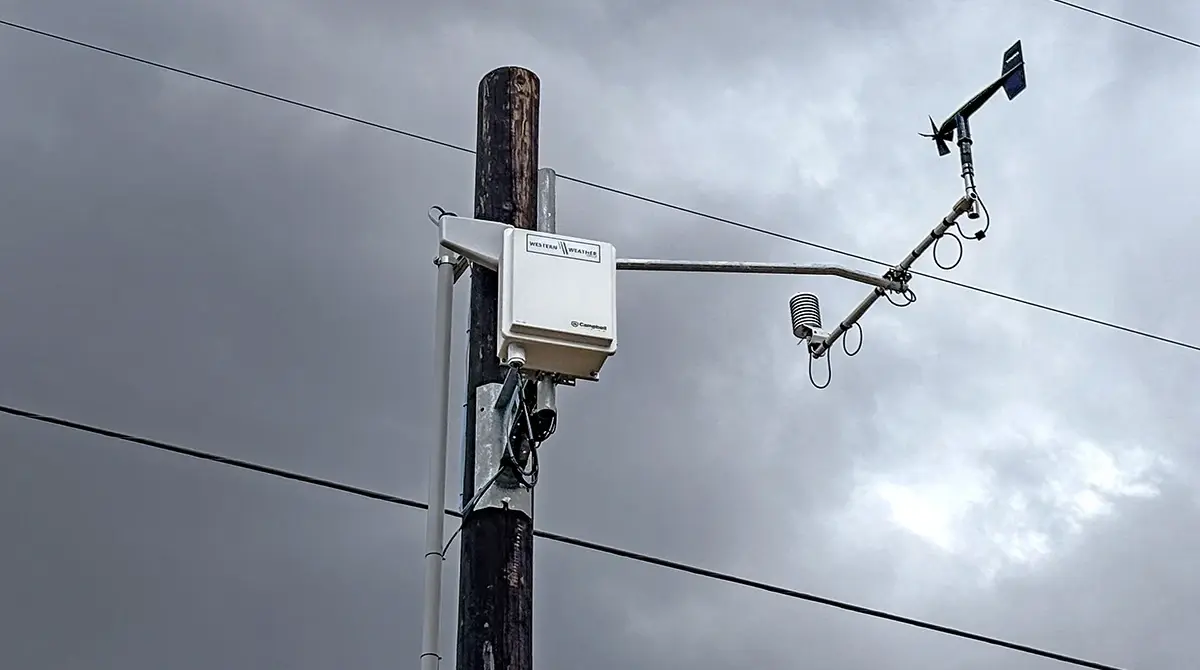
Congratulations! You, or someone you work with, are now the proud owner of a Western Weather Group (WWG) weather station (or a network of stations). Depending on what instrumentation is installed, that means you’re collecting real-time, ground-truth weather data. The range of observations could be anything: from air temperature and humidity, to rainfall, wind, soil moisture, and much more.
But how can you be sure that the data being collected is accurate? Well, that’s where our network health checks come into play, and how WWG really stands out. While our weather stations are industrial-grade, and quite resilient, sometimes things beyond your control can interrupt data flow from one or more sensors.
At WWG, we spend a lot of time behind the scenes making sure the data coming from your station, or any station we manage, is accurate, reliable, and ready to be used with confidence. To do so, there is a series of checks that are done to make sure that all weather stations that we manage show good, quality data.
Step One: Is the Station Reporting?
It sounds obvious, but this is one of the first, and most important, checks we do: “is the station on?”
Forecasting always starts with “what is happening right now” or “what happened yesterday.” If a station hasn’t reported in a while, the data is out of date and cannot be used. Up-to-date observations coming in from the field are crucial to our decision making.
We pride ourselves on taking data and information coming from our weather stations and using it as a component for the basis of our human-derived forecasts. This often reveals biases or errors in computer models and knowing that can then help us adjust our numbers accordingly to accomplish greater precision.
Out of date or old data is easily seen on both our forecasting products and on our online dashboards; the station will show data that is “greyed out,” not in the dark font color. Additionally, our online dashboards will also consider any missing data when doing statistical calculations, such as average or maximum temperature.
Step Two: Identifying Erroneous, Inconsistent Data with Daily Monitoring
Once we know a station is reporting, we move on to checking whether the data makes sense. We look for errors or readings that stand out when compared to nearby stations.
The best example of this is after the first major rainfall event of the water year. Inevitably, since weather stations are in the field in a lot of cases, damage or blockage of a rain gauge will occur. This in turn will then lead to what we call rain gauge “plugging:” rain is unable to reach the mechanism in the gauge that will measure the rainfall. This will show up on our forecasts as a station showing little to no rainfall, while nearby stations will have half an inch or more.
We run a wide range of data quality checks daily. These examples are just a sample of what we look for, not a comprehensive list, but they give a good idea of how we spot potential issues early:
- Maximum/minimum temperature: Is there a station that is significantly warmer/colder than its neighbors?
- Humidity: Does a station show very low dew point average/relative humidity average as compared to nearby stations?
- Wind speed/direction: Is a station showing 0 wind speed or lack of change of direction? This is almost virtually impossible as even a very calm wind day will still produce a little bit of air movement.
Step Three: Weekly Deep Dives
And that is essentially what is done daily by our forecasting team here at WWG.
Now, admittedly, that is a very surface level check, and we are only human after all, which is why on a weekly basis, a deeper dive into the overall health and status of our entire agricultural station network is performed by me personally.
In this check, I will compile various data from all our weather stations and can then take a closer look at the various issues, and, more importantly, why these stations are having issues.
Take for example our lengthy streak of fog and low clouds in the Central Valley that lasted from late November into mid-December of 2025. During this time, over two dozen stations ended up losing connection with our data platform. By looking closer into the data, I was able to determine that the persistent fog prevented the batteries in these stations from properly charging. While this over a short time period is not usually an issue, the lengthy lack of charging caused all the batteries to gradually lose voltage, eventually dropping low enough for them to completely die.
Finding the why behind issues like this helps us respond faster and plan smarter going forward.
Step Four: From Detection to Resolution, Field Services in Action
Now that we’ve identified which stations are out of date or showing questionable data, the next step is acting. That’s where our Ag Field Services team comes in.
Once an issue is flagged, either by WWG or a client, it’s logged and passed along to Field Services for follow-up and resolution.
From there, the usual procedure involves contacting the station owner/caretaker and determining a course of action to rectify the problem. If needed, the Field Services team will be activated and fix the problem, but usually the fix can be as simple as having somebody associated with the station go out and fix it themselves; for example, clearing a leaf from a rain gauge.
Step Five: You Become Part of the Quality Process
There is another kind of check that is done as well; and that’s by you, the owner (observer) of the weather data.
If you use the data regularly, you’re often the first to notice when something doesn’t look right. Maybe the temperature seems off, rainfall looks suspicious, or a sensor appears it hasn’t updated in a while. When that happens, we encourage all who use our weather data to inform us if something is wrong.
From there, WWG can then provide instruction, material, or service to resolve the issue. Often things are fixed the quickest when noticed by others.
Step Six: Enhancing Data Quality with AI-Assisted Monitoring
What comes next, you may ask? WWG is advancing data quality by introducing AI to help detect and flag anomalies.
AI tools can scan enormous amounts of data at once and spot subtle problems that are easy to miss. Of course, anything flagged will still be reviewed by a real human because context matters.
The result? Fewer missed issues, faster fixes, better checking, less downtime, and even more reliable data for everyone.
Western Weather Group’s Commitment to Reliable Weather Data
And that’s about it as far as ensuring data is checked and verified. Of course, no method is perfect, which is why across our organization, we are consistently looking at ways to improve our methodology and have multiple algorithmic layers and humans monitoring data flowing in.
As your station network grows, our health checks will scale along with it. Our goal is simple: ensure that the weather data from our stations is timely, precise, and accurate, so you can trust it when it matters most.
Western Weather Group at 20 years: what I’ve learned and where we’re headed
I still remember being the youngest team member in the office. It was 2007. I was fresh out of living in the islands and graduating from the University of Hawaii with a meteorology degree and surf forecasting experience. Western Weather Group hired me “for my Hawaii experience” as their 6th employee. The office was small, the desks full of hand-labeled maps, and most mornings started well before sunrise with one mission: forecast for growers when frost or other weather impacts threatened their crops.
Back then, we might sell five weather stations a year. Forecasting was the focus. But I liked doing a bit of everything: writing forecasts, driving out for installs that spanned from the ocean to the mountains, calibrating sensors, and listening to how clients used the data when decisions were on the line and how we could really make an impact.
The early years: agile, personal, all in
The culture was tight-knit, almost like family. Most of the team had worked together since the ’80s, and I was the youngest. What bound us together was a shared expectation: always do right by the client.
Field days were a crash course in both agriculture and humility. Once on a week-long calibration trip through wine country in the extreme summer, I learned that forecasts improved the moment we started really listening. Those conversations turned lines on a forecast into real decisions made in the vineyard at 3 a.m.
I also pushed small but useful changes: convincing leadership to buy a $200 Garmin so we’d stop using paper maps, photographing every installation so we had a record that would later turn into troubleshooting guides, and showing up at trade shows to learn what sensors growers wished they had.
“You can buy a weather station anywhere. What you can’t always buy is someone who notices when the data goes quiet and calls you first.”
Communication and data: the two shifts that changed everything
The biggest changes came in two areas: how we communicated and how we viewed data.
When I started, many stations weren’t even cellular, you couldn’t check them until you were standing there. Then came 3G, 4G, and eventually selling our own data plans around 2014.
By 2017, satellite links became real options for hard-to-reach sites. Now universal SIMs and hybrid cellular satellite communications mean you can drop a station almost anywhere and let the network choose the path home.
Our website began as a single page of text. No dashboards. No charts. Early on, we wrestled with duplicate datasets and erroneous data. Throughout 2015 and 2016 we built the cloud-based data platform clients use today: API-driven, efficient, and a foundation built to keep evolving.
What clients really bought, and still do: trust and suppor
Support has always been our north star. Clients who’ve come to us after buying stations elsewhere often share a familiar story: when the system failed, help was slow or nonexistent. Sometimes no one even knew the station had stopped reporting.
We tried to be different. For years, part of my morning energy drink routine was scanning data I knew clients checked daily, looking for hiccups before they called us. As we’ve grown, a dedicated tech support team now carries that torch, especially for utilities. On the agriculture side, experience still matters because every ranch, block, and orchard has its quirks.
But in the end, it’s people who make the difference. I was given the leeway to modernize little things. One retired team member still drops by with stories (and questions about Paso Robles wine). Some clients have been with us since the ’90s. I’ve had moments at trade shows where someone shows me a report they get in Napa, and it turns out to be ours. Consistency counts most: if you open the email at 6 a.m., the forecast is there.
“At 4:12 a.m. a grower texted, ‘Your alert saved my block.’ I kept that message starred for years.”
What’s next: growing east with new climates and expectations
For years, our footprint sat west of the Rockies. That’s changing fast. This winter we are officially coast-to-coast. We’re proving how power budgets hold up in extreme cold, how sensors behave in impactful weather events, and what it takes to provide the same level of service when support is a thousand miles away. In California’s Sierra Nevada, what used to be a summer fire season has stretched deep into fall and even winter.
Drier conditions and stronger winds, sometimes exceeding 75 mph, now create extreme fire weather well past the traditional peak months. These later-season events test both our equipment and our tech support team, pushing us to help customers through increasingly critical periods. With stations now spanning from the Pacific to the Atlantic, we’re confident in our ability to handle whatever the seasons bring.
New geographies bring new instruments: snow depth, icing on lines, and air-quality modules that connect into existing systems. The most popular sensors for fire weather remain temperature, humidity, and wind speed and direction. Depending on utility needs it’s rainfall, solar radiation, fuel, soil moisture, and barometric pressure. On the communications side, hybrid cellular satellite with universal SIMs means site selection can finally be about science, not signal bars.
And the future won’t just be about technology; it will also be about the changing environment we all operate in. Floods and fires are growing threats. As populations expand, long-term data is as important as real-time alerts. Some clients now buy climate stations to track rainfall totals, temperature shifts, and seasonal variations that explain why one vintage differs from another.
Sometimes it’s knowing when a weather station is essential, sometimes it’s recognizing the use case for a climate station. Either way, the data helps people plan, adapt, and make better decisions.
The constant that keeps me here
Why stay so long? Because no two days are the same, and the work matters. I still love the moment when a name on a spreadsheet becomes a handshake at an install, then a message months later: “That alert saved our fruit.” Or when a utility operations lead calls after a wind event and says, “Your stations told us where to roll crews.”
When Western Weather Group turns 40, I hope people say we grew without losing our center: solid products, human support, and a reputation earned by showing up. Back in 2007, a good day meant the forecast went out on time and maybe we sold a station that quarter. Today, I watch data stream from mountains in Virginia to lines around Houston, from vineyards in Napa to ditches on Maui.
The scale is different, but the promise is the same: precise forecasts, dependable delivery, and unwavering support because lasting relationships are what truly weather the storm.
20 Years of weathering the unexpected: a look back at Western Weather Group
As we celebrate 20 years, reflecting on my journey with Western Weather Group fills me with immense pride and gratitude. Our story isn't just about meteorology; it's about the people, the breakthroughs, and the enduring client trust that has defined our success.
From humble beginnings
The story of Western Weather Group traces its roots back to the mid-1980s at Chico State, where a company called Nowcasting was established. This initial venture had a very specific purpose: to forecast rice-burning conditions in the Sacramento Valley, which was done through a network of automated weather stations in the valley to track winds, temperature, and stability. This foundational work instilled a culture of precision and public service that has been carried forward ever since.
Out of this early legacy grew another entity, Weather Network, and eventually, the company that would become Western Weather Group. The unifying thread throughout these transitions has always been the same: a commitment to data, accuracy, and genuine care for the people who depend on their forecasts.
Building a business based on relationships and microclimates
The formation of Western Weather Group itself was born out of a pivotal moment in the early 2000s. At that time, Weathernews sought to consolidate its operations in Norman, Oklahoma.
Rather than uproot their lives and leave behind the relationships built in Northern California, a handful of employees, including me, chose a different path. We stayed and began to build something new.
And so, Western Weather Group was formed.
In the beginning, our team, who we deemed the Core 4, had little more than a passion for meteorology, a determination to make it work, and a core group of loyal agricultural clients.
We also knew what mattered: relationships and microclimates. This deep understanding and focus formed Western Weather Group’s competitive edge since day one.
A foundation built on trust
As the company grew, so did the people who defined it. Western Weather Group’s stability and integrity were shaped by our founder, Don Schukraft along with his wife Susan, whose leadership through the early years set the tone for everything that followed. The dedication of colleagues like Irene, Sherry, Dennis, Tom, and Matt pushed us through crucial stages of growth, expanding our expertise into utilities, agriculture, and beyond.
Today, our next generation of professionals continues to carry forward that same spirit of care, expertise, and service. We've always been a company defined by its people.
Our defining breakthrough, from patchwork to platform
The story of our growth hit a pivotal moment in 2016 with a live demo of our first cloud-based, API-driven database. For years, we relied on patchwork systems that stretched our capabilities to their limit. Seeing that new platform in action was more than a technical upgrade; it was the breakthrough that showed us we were positioned to grow, thrive, and serve clients in ways we had only imagined. It unlocked the potential we knew we had.
Moments and milestones that shaped our journey
Looking back, a handful of moments stand out as key turning points.
The day we officially became Western Weather Group marked more than a name change. It was proof that our roots, our clients, and our dedication meant more than corporate centralization ever could.
The Hawaii Commercial & Sugar project offered us a chance to take our deep-dive expertise beyond familiar terrain. That experience proved our ability to adapt by traveling across oceans into entirely new climates without losing sight of the precision and reliability that define our work.
Winning the SDG&E contract in 2009 was a defining opportunity that emerged from the critical need for wildfire safety and awareness. They heard about us through the rice burning program as well as a network of weather stations we installed in Maui. It showed our work could have a tangible impact on communities in moments of real need, keeping us strong when the recession had us on the ropes.
And the most telling are the countless times clients bypassed call centers and reached us directly, even after hours, because they knew we’d answer the phone. Those moments may not have made headlines, but they revealed the heart of who we are. That simple act of being there when it matters is the core of our service, and the thread that runs through every milestone along our journey. To this day, when the phone rings, it is answered by someone ready to address what’s needed.
Our clients are the heart of Western Weather Group
None of this growth would matter without our clients. Some have trusted us for more than three decades, staying with us through every season. That kind of loyalty is earned; it comes from relationships, reliability, and results. Whether it's a grower watching for frost, a utility bracing for wildfire winds, or a ski resort preparing for a storm, our clients know we are here, and we’re here to stay.
“To me, working on a weather station is like Christmas. It’s a new toy to go play with. I’ve always loved working with the equipment and programming; it’s just fun. It’s never felt like work.”
20 years of progress and the road ahead
Over the past 20 years, we’ve achieved remarkable milestones. We’ve evolved from dial-up modems and 386 computers (and driving into the office at 2 a.m. to reboot a computer to keep things running) to powerful cloud-based databases that let us scale monitoring and forecasting like never before. We’ve helped agricultural clients protect crops worth millions, from vineyards in Napa to sugarcane fields in Hawaii. And we’ve partnered with major utilities to build critical wildfire safety networks that safeguard millions of lives.
And after all these years, the work still manages to surprise me. Just recently, I was up at Mammoth Mountain, sitting in the truck rewriting a program for a weather station perched on a 20-foot platform. It was about 40 degrees, the wind was howling, and I was troubleshooting an operating system glitch. While I was focused on that, a bear wandered right through the station. The crew asked if I’d seen it, and I hadn’t because I was too busy typing away in the truck! After 20 years, that’s the thing; you just never know what’s going to happen out there.
As we look to the future, the challenges of climate, wildfires, and agriculture are only growing more complex. But so are the tools available to meet them. Better sensors, stronger data integration, and continued innovation will keep us ahead of the curve.
“Our responsibility remains clear: to support the people and industries that depend on us, with the same care and commitment that defined our past.”
Here’s to 20 years of helping people weather the unexpected, and to the decades still ahead. The ride has been incredible, and I genuinely believe the best is yet to come.
20 Years of Service, Innovation, and trust at Western Weather Group
Twenty years ago, Western Weather Group began with one guiding idea: we would never let our clients down. What started as a small effort to serve growers in Northern California has grown into a trusted partner for agriculture and utilities across the country.
In the early days, agriculture was our foundation. Vineyards, orchards, and growers’ associations across California needed reliable, hyper-local weather data to protect crops worth millions. We delivered by installing and maintaining industrial-grade stations built for accuracy, turning that exclusive data into forecasts tailored to each grower’s unique environment. Micro-climates matter, and when airport readings 20 miles away fell short, our precise, site-specific data often meant the difference between losing a harvest and saving it.
Not long after, we found ourselves facing new challenges. In 2007 during a period of devastating wildfires in Southern California, a major utility turned to us for help. Together, we built one of the first weather networks focused on utility safety. That moment opened a new chapter for Western Weather Group, supporting utilities as they navigated wildfire risk, public safety power shutoffs, and the growing responsibility of keeping communities safe.
Today, our work reaches far beyond those first installations. Our weather networks and forecasts are part of the decision-making process for major utilities nationwide. The impact is real and measurable: utility-caused wildfire incidents have fallen significantly since these networks were deployed. Agriculture remains a critical part of who we are, but our role has expanded into protecting both people and infrastructure at scale.
What has never changed is how the incredible WWG team supports our clients through every phase of their project. When a station is installed, our commitment doesn’t end, it begins. Our clients know when they call someone will pick up the phone ready to respond. That responsiveness has always been our promise. Clients know they can count on us to be present, to listen, and to solve problems quickly. And when their needs evolve, we adapt, whether that means adding new sensors, building customer data streams, or designing a system from the ground up.
At the core is a principle we’ve never wavered from: fairness. From the beginning, we chose steady, sustainable pricing over chasing short-term gains. We’ve always believed in strong relationships and that trust outlast aggressive margins. That philosophy has earned us something rare in today’s world: clients who have been with us for decades.
As we mark Western Weather Group’s 20th anniversary, I see a company that has protected vineyards on cold spring nights, helped utilities prevent catastrophic wildfires, and supported industries and communities with decisions that matter. And while much has changed, our mission remains exactly what it was in the beginning: deliver accurate, reliable, client-focused weather solutions that safeguard people, property, and livelihoods.
Here’s to the next twenty years of service, trust, and impact.