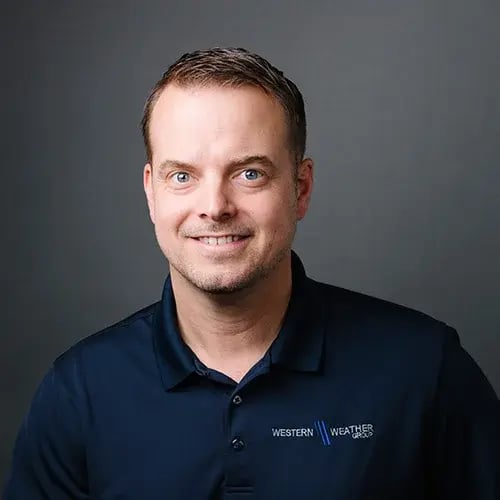
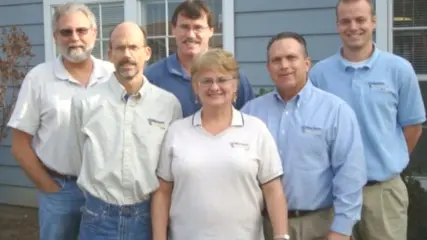
I still remember being the youngest team member in the office. It was 2007. I was fresh out of living in the islands and graduating from the University of Hawaii with a meteorology degree and surf forecasting experience. Western Weather Group hired me “for my Hawaii experience” as their 6th employee. The office was small, the desks full of hand-labeled maps, and most mornings started well before sunrise with one mission: forecast for growers when frost or other weather impacts threatened their crops.
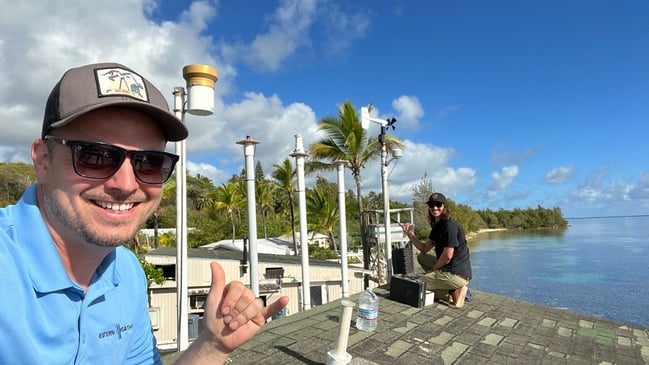
Back then, we might sell five weather stations a year. Forecasting was the focus. But I liked doing a bit of everything: writing forecasts, driving out for installs that spanned from the ocean to the mountains, calibrating sensors, and listening to how clients used the data when decisions were on the line and how we could really make an impact.
The early years: agile, personal, all in
The culture was tight-knit, almost like family. Most of the team had worked together since the ’80s, and I was the youngest. What bound us together was a shared expectation: always do right by the client.
Field days were a crash course in both agriculture and humility. Once on a week-long calibration trip through wine country in the extreme summer, I learned that forecasts improved the moment we started really listening. Those conversations turned lines on a forecast into real decisions made in the vineyard at 3 a.m.
I also pushed small but useful changes: convincing leadership to buy a $200 Garmin so we’d stop using paper maps, photographing every installation so we had a record that would later turn into troubleshooting guides, and showing up at trade shows to learn what sensors growers wished they had.
“You can buy a weather station anywhere. What you can’t always buy is someone who notices when the data goes quiet and calls you first.”
Communication and data: the two shifts that changed everything
The biggest changes came in two areas: how we communicated and how we viewed data.
When I started, many stations weren’t even cellular, you couldn’t check them until you were standing there. Then came 3G, 4G, and eventually selling our own data plans around 2014.
By 2017, satellite links became real options for hard-to-reach sites. Now universal SIMs and hybrid cellular satellite communications mean you can drop a station almost anywhere and let the network choose the path home.
Our website began as a single page of text. No dashboards. No charts. Early on, we wrestled with duplicate datasets and erroneous data. Throughout 2015 and 2016 we built the cloud-based data platform clients use today: API-driven, efficient, and a foundation built to keep evolving.
What clients really bought, and still do: trust and support
Support has always been our north star. Clients who’ve come to us after buying stations elsewhere often share a familiar story: when the system failed, help was slow or nonexistent. Sometimes no one even knew the station had stopped reporting.
We tried to be different. For years, part of my morning energy drink routine was scanning data I knew clients checked daily, looking for hiccups before they called us. As we’ve grown, a dedicated tech support team now carries that torch, especially for utilities. On the agriculture side, experience still matters because every ranch, block, and orchard has its quirks.
But in the end, it’s people who make the difference. I was given the leeway to modernize little things. One retired team member still drops by with stories (and questions about Paso Robles wine). Some clients have been with us since the ’90s. I’ve had moments at trade shows where someone shows me a report they get in Napa, and it turns out to be ours. Consistency counts most: if you open the email at 6 a.m., the forecast is there.
“At 4:12 a.m. a grower texted, ‘Your alert saved my block.’ I kept that message starred for years.”
What’s next: growing east with new climates and expectations
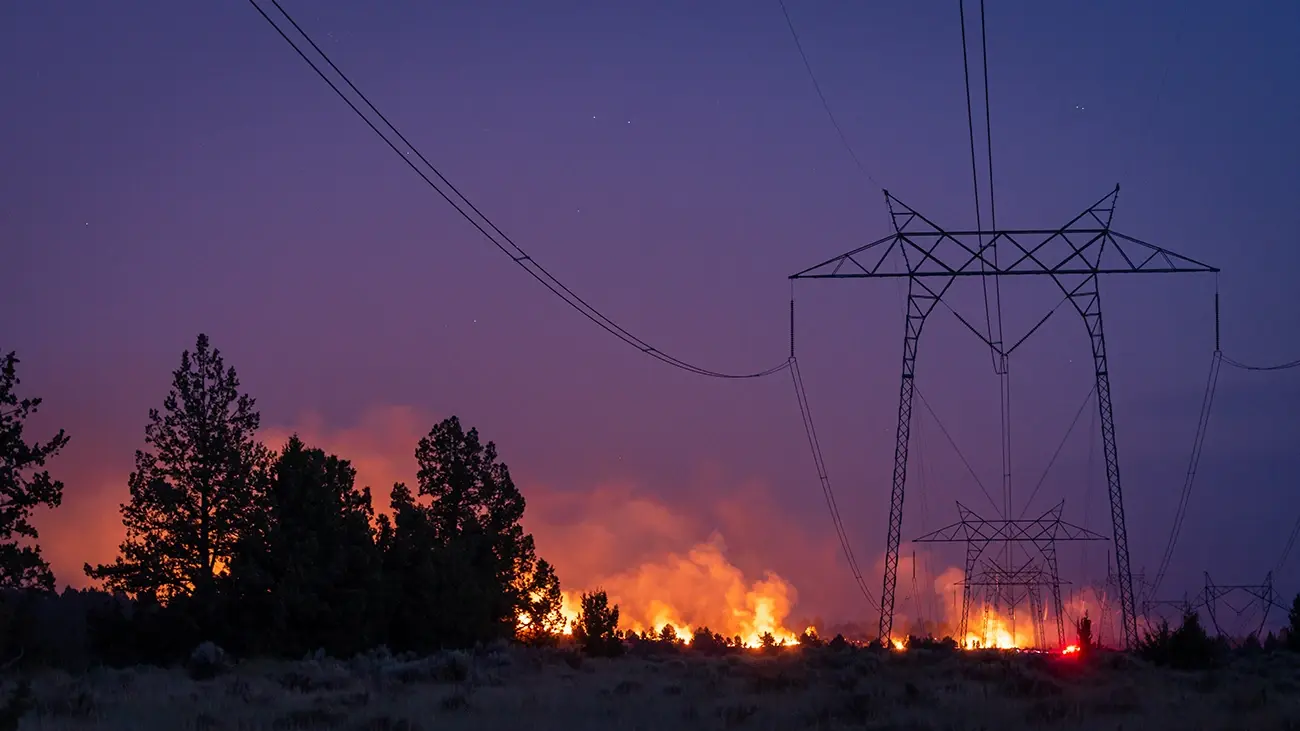
For years, our footprint sat west of the Rockies. That’s changing fast. This winter we are officially coast-to-coast. We’re proving how power budgets hold up in extreme cold, how sensors behave in impactful weather events, and what it takes to provide the same level of service when support is a thousand miles away. In California’s Sierra Nevada, what used to be a summer fire season has stretched deep into fall and even winter.
Drier conditions and stronger winds, sometimes exceeding 75 mph, now create extreme fire weather well past the traditional peak months. These later-season events test both our equipment and our tech support team, pushing us to help customers through increasingly critical periods. With stations now spanning from the Pacific to the Atlantic, we’re confident in our ability to handle whatever the seasons bring.
New geographies bring new instruments: snow depth, icing on lines, and air-quality modules that connect into existing systems. The most popular sensors for fire weather remain temperature, humidity, and wind speed and direction. Depending on utility needs it’s rainfall, solar radiation, fuel, soil moisture, and barometric pressure. On the communications side, hybrid cellular satellite with universal SIMs means site selection can finally be about science, not signal bars.
And the future won’t just be about technology; it will also be about the changing environment we all operate in. Floods and fires are growing threats. As populations expand, long-term data is as important as real-time alerts. Some clients now buy climate stations to track rainfall totals, temperature shifts, and seasonal variations that explain why one vintage differs from another.
Sometimes it’s knowing when a weather station is essential, sometimes it’s recognizing the use case for a climate station. Either way, the data helps people plan, adapt, and make better decisions.
The constant that keeps me here
Why stay so long? Because no two days are the same, and the work matters. I still love the moment when a name on a spreadsheet becomes a handshake at an install, then a message months later: “That alert saved our fruit.” Or when a utility operations lead calls after a wind event and says, “Your stations told us where to roll crews.”
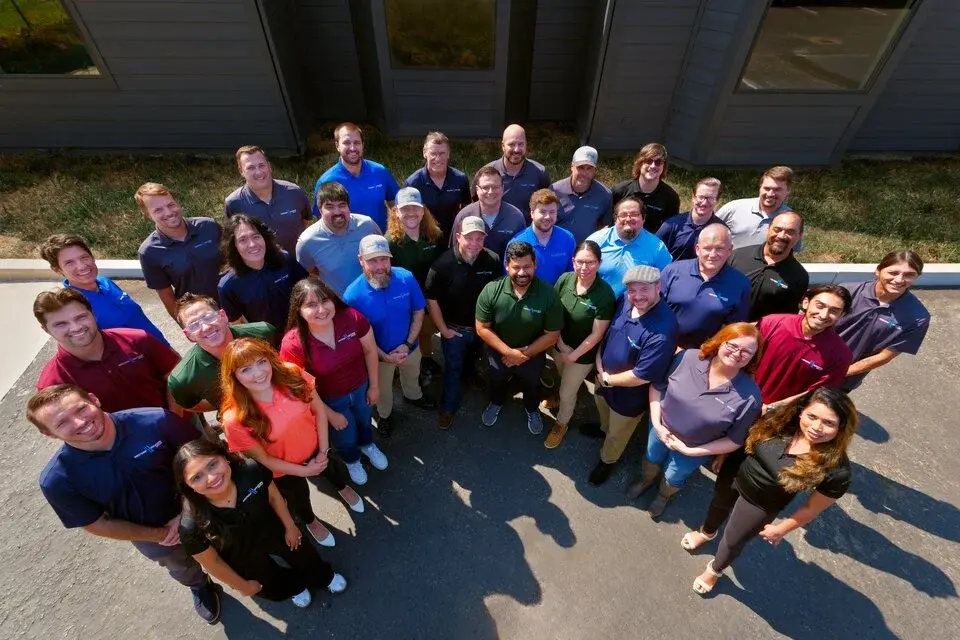
When Western Weather Group turns 40, I hope people say we grew without losing our center: solid products, human support, and a reputation earned by showing up. Back in 2007, a good day meant the forecast went out on time and maybe we sold a station that quarter. Today, I watch data stream from mountains in Virginia to lines around Houston, from vineyards in Napa to ditches on Maui.
The scale is different, but the promise is the same: precise forecasts, dependable delivery, and unwavering support because lasting relationships are what truly weather the storm.